Planning a trip to Switzerland can feel a bit like trying to solve a beautiful but incredibly complex puzzle. We have all seen the videos: the impossibly bright red train snaking across a high stone viaduct, the wooden chalets overflowing with pink geraniums, and those jagged, snow-dusted peaks that look like they were drawn by hand. It looks like a fairy tale, and honestly, when you stand there in person, it feels like one too.
But behind that effortless postcard scenery lies a web of logistics, mountain transport passes, multiple language zones, and let’s be entirely honest, some of the highest price tags in the travel world. If you are standing at the starting line of planning your very first Swiss adventure, it is completely normal to feel a bit overwhelmed by the sheer number of cable cars, regions, and acronyms. This guide is built to cut through that noise. No corporate travel jargon, no robotic itinerary lists—just an honest, feet-on-the-ground look at how to pull off your dream trip seamlessly.
Setting the Stage: When to Go and How Long to Stay
One of the biggest mistakes first-time visitors make is treating Switzerland like a small, flat country where you can just zip around and see everything in a weekend. Yes, it is geographically compact, but the Alps are a massive physical barrier. A distance that looks like a twenty-minute drive on a flat map can easily turn into a two-hour journey involving a cogwheel train, a cable car, and a brisk walk.
If you want a trip that actually allows you to breathe, absorb the scenery, and not spend your entire vacation staring at the back of a train seat, you need a realistic timeline. The absolute sweet spot for a first visit is seven to ten days. This gives you enough time to experience two distinct regions without feeling like you are running a marathon.
Your timing matters just as much as your duration. If your dream involves hiking through waist-high wildflower meadows and seeing the high-alpine trails without stepping over patches of ice, you want to aim for late June through September. July and August are spectacularly beautiful, but they are also the absolute peak of the tourist rush.
What about winter? If you are a skier or someone who wants to experience the cozy, fondue-fueled dream of a snow-covered alpine village, December through March is your window. Just keep in mind that the shoulder seasons—specifically November and April—can be tricky. Many cable cars shut down for annual maintenance during these transition months, and high-altitude trails are often either turning into mud or buried under early snow, making it a tough time for a first-tier mountain experience.
Choosing Your Home Bases: The First-Timer Formula
When you start researching, it is tempting to book a different hotel every single night to cover more ground. Please don’t do this to yourself. Packing up your bags, checking out, hauling luggage to the station, and checking into a new place every twenty-four hours is a surefire way to burn out by day four.
Instead, the smartest strategy for a first trip is to pick two well-connected “home bases” and use the legendary Swiss rail system to do day trips. For a classic, quintessential first-time itinerary, you cannot beat the combination of Lucerne and the Bernese Oberland.
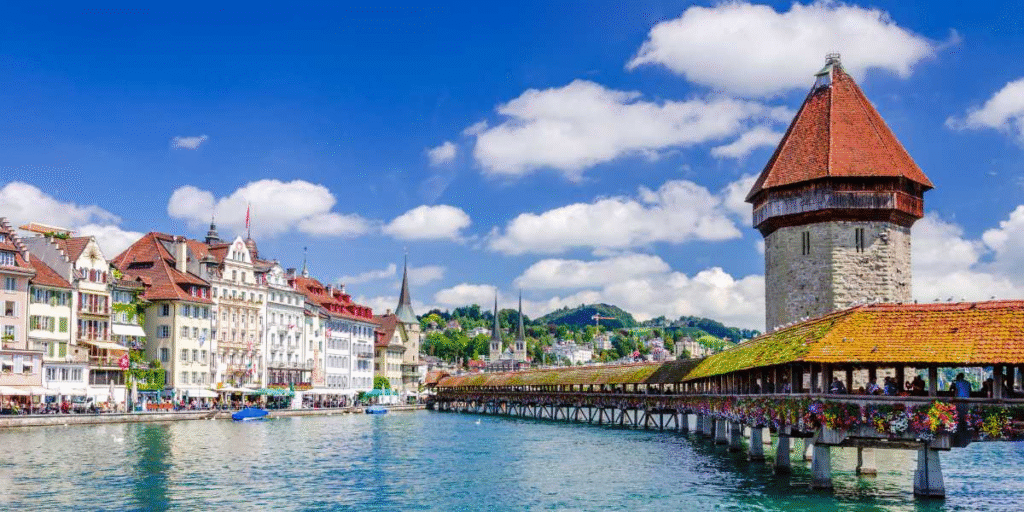
You will likely land at Zurich Airport. Rather than spending a chunk of your precious time in a sprawling financial hub, hop right onto a direct train from the airport station to Lucerne. Within an hour, you will find yourself in a city that feels like a living museum. Lucerne is the perfect gentle introduction to the country. Spend a couple of days walking across the 14th-century Chapel Bridge, taking a historic paddle-steamer cruise across the glassy waters of Lake Lucerne, and ascending Mount Pilatus via the world’s steepest cogwheel railway.
Once you have found your travel legs, pack up and take the incredibly scenic train pass down into the Bernese Oberland, specifically targeting the Jungfrau Region. This is the Switzerland of your imagination.
But if you want to wake up, step onto a wooden balcony, and hear nothing but distant cowbells and the roar of glacial waterfalls, book a chalet in Wengen or Lauterbrunnen. From this single base, you can spend four or five days exploring the jaw-dropping Lauterbrunnen Valley (home to 72 waterfalls), riding the gondola up to Grindelwald First for a walk along a cliff-face walkway, or taking the iconic train up to Jungfraujoch, the “Top of Europe.”
Decoding the Swiss Transport Puzzle: Trains vs. Cars in Switzerland
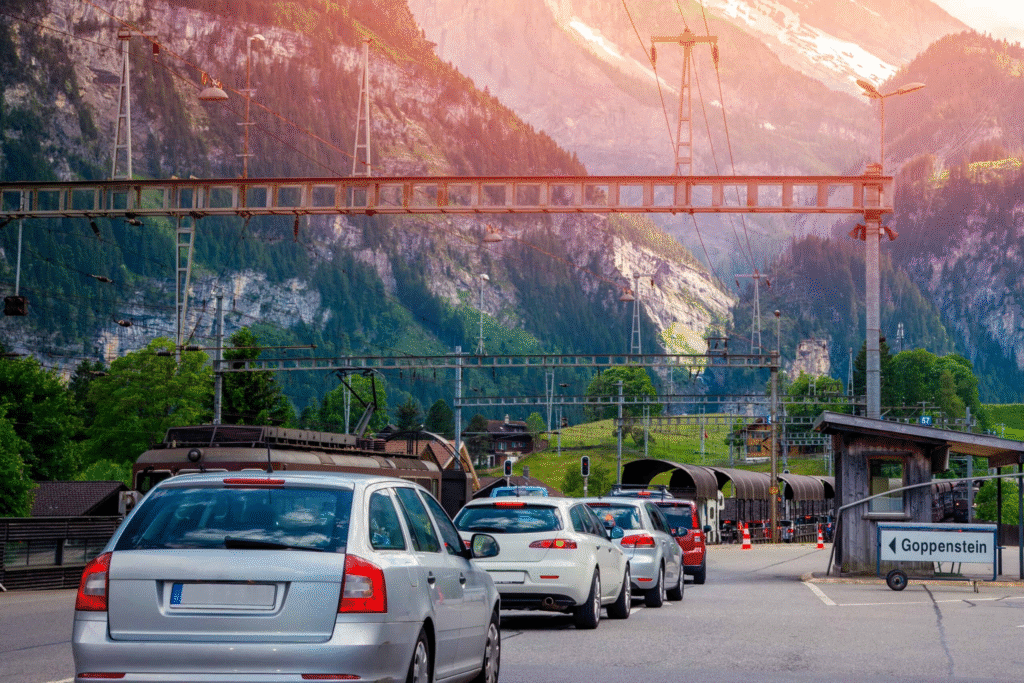
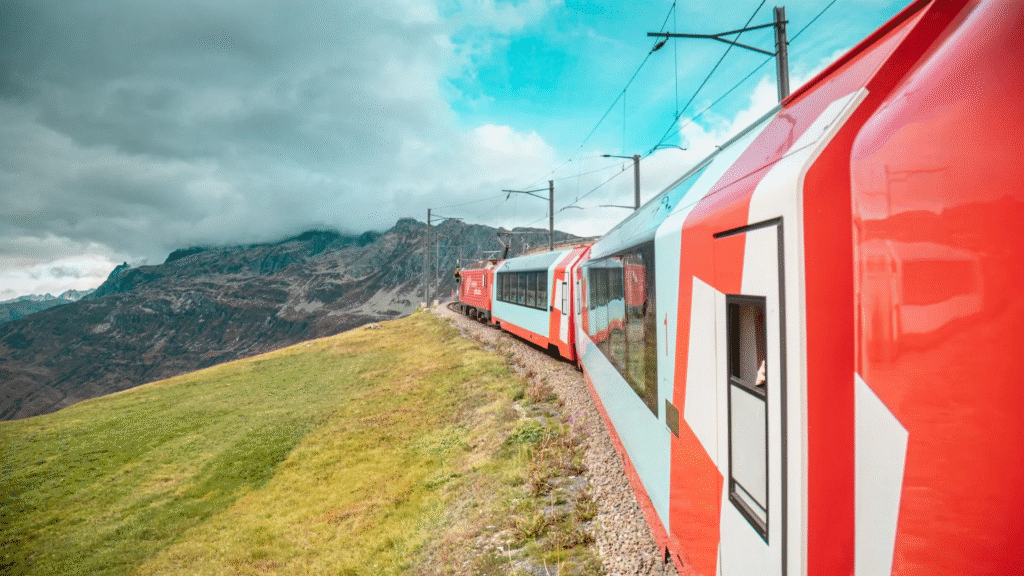
One of the most frequent debates among travelers planning their first trip is whether to rent a car or rely entirely on public transportation. In most parts of the world, a car represents freedom. In Switzerland, the train system is the ultimate freedom.
The Swiss Federal Railways (SBB) is a marvel of human engineering. The trains run with the precision of, well, a Swiss watch. They are clean, quiet, have massive panoramic windows, and they connect seamlessly with post-buses, lake ferries, and mountain cable cars. Furthermore, many of the most beautiful villages you will want to visit—like Zermatt or Mürren—are entirely car-free. If you drive, you will end up paying hefty fees to leave your rental car in a parking garage miles down the valley while you take a train up anyway.
If you choose the rails, your next step is navigating the pass system. Buying individual tickets as you go is an easy way to drain your bank account. For almost every first-time visitor, the investment in a Swiss Travel Pass pays for itself within the first few days.
This single ticket gives you unlimited travel on all standard trains, buses, and public boats across the entire country. It also covers your inner-city trams, gives you free entry to hundreds of museums, and offers deep discounts (usually 25% to 50% off) on the high-altitude mountain railways and cable cars that aren’t fully covered by the standard network. You just show the QR code on your phone to the conductor, sit back, and watch the mountains roll past.
Tackling the Sticker Shock: How to Eat and Switzerland Explore Without Breaking the Bank
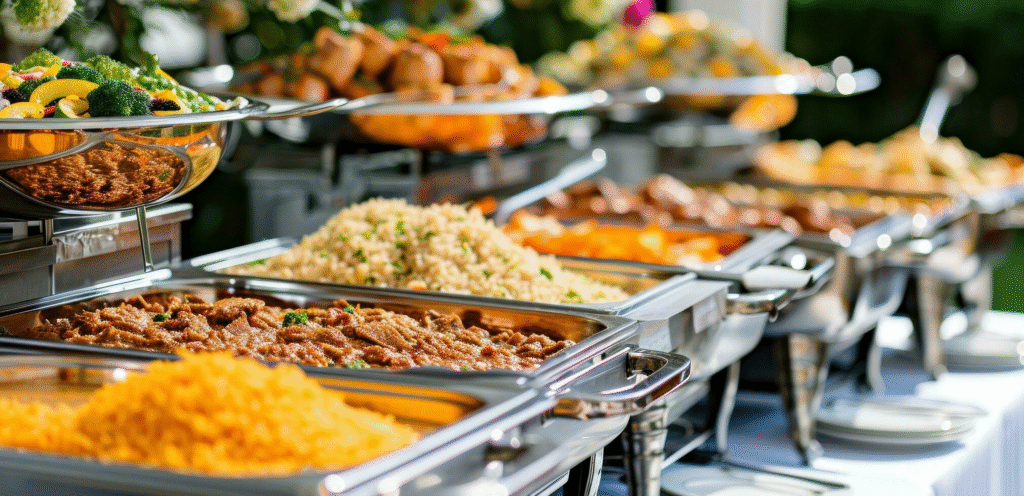
Let’s not sugarcoat it: Switzerland is undeniably expensive. It regularly ranks as one of the priciest destinations on earth for daily expenses. If you walk into a standard, mid-range sit-down restaurant for dinner, a single casual main course will easily run you 35 to 50 Swiss Francs (CHF). A basic lunch for two can quickly cross the 80 CHF mark. If you aren’t careful, food costs alone can put a serious dent in your travel budget.
Fortunately, you do not have to live on protein bars to survive. The absolute best hack for budget-conscious travelers in Switzerland is to embrace the local supermarkets: Coop and Migros.
These aren’t just grocery stores; they are a cultural institution. Almost every major train station and town center has a large Coop or Migros featuring incredible grab-and-go sections. You can pick up fresh, bakery-quality artisan bread, local cheeses, rotisserie chickens, fresh salads, and pre-made sandwiches for a fraction of restaurant prices. Taking a premium supermarket spread up to a lakeside bench or a mountain viewpoint for a picnic lunch isn’t just a way to save money—it is often a far better experience than sitting inside a crowded dining room.
When you do choose to dine out, look for the Tagesteller or Menü du Jour (daily lunch specials), which are significantly cheaper than ordering off the evening menu. And remember, tipping is not expected or required here; a service charge is legally built into your bill, though rounding up to the nearest few francs for exceptional service is a kind gesture. Finally, never spend money on bottled water. Switzerland has some of the cleanest, crispest tap water in the world, and almost every town square features a historic fountain with clean, drinkable mountain water flowing freely. Bring a reusable bottle and fill up for free.
Packing Smart for the Alps: Layers Over Luxury
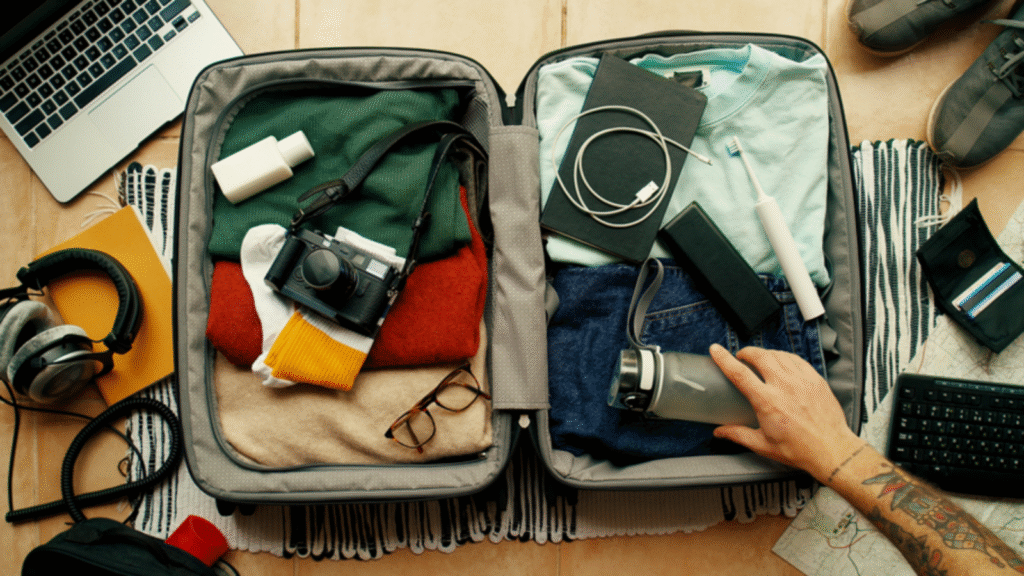
When you are packing your bags for Switzerland, leave the heavy fashion statement pieces at home. This is a country where utility and comfort reign supreme. Even if you don’t consider yourself a hardcore hiker, you will be doing an immense amount of walking. Cobblestone streets in the old towns will punish thin flats, and mountain gravel trails require real support.
The golden rule of Swiss travel is layers. Mountain weather is notoriously unpredictable. You can stand in the valley of Lauterbrunnen in the morning wearing a T-shirt under a bright sun, and two hours later, you can be standing at the top of a mountain station at 10,000 feet where the wind is howling and the temperature is hovering near freezing.
Your daypack should always contain a lightweight, windproof, and waterproof rain jacket, a warm fleece or light down layer, and a pair of sunglasses. The alpine sun reflecting off the glaciers and snowfields is incredibly intense, even on cooler days. If you plan to head up to spots like Jungfraujoch or Mount Titlis, sturdy closed-toe shoes with good grip are a non-negotiable requirement if you want to actually step out onto the snow plateau safely.
Frequently Asked Questions
1.Do I need Swiss Francs (CHF) or can I use Euros?
Switzerland uses the Swiss Franc (CHF). While some tourist spots accept Euros, you will get a terrible exchange rate and receive change in Francs. The country is nearly cashless, so you can easily rely on credit cards or mobile pay, keeping just 20–50 CHF in cash for emergencies.
2.Can I get by speaking only English?
Yes, easily. While Switzerland has four official languages, English is fluently spoken by almost everyone in hotels, restaurants, and train stations. Learning a quick “Grüezi” (hello) or “Merci” (thank you) is always appreciated, though!
3.Is the tap water safe to drink?
It is exceptionally safe and tastes amazing. It flows directly from natural springs and glaciers. You can freely refill your bottle at any hotel tap or public town fountain unless you see a sign reading “Kein Trinkwasser” (not drinking water).
4.Should I rent a car if I am traveling with family?
Stick to the trains. While a car offers flexibility for heavy luggage or toddlers in valley areas, iconic alpine villages like Wengen, Mürren, and Zermatt are entirely car-free. Navigating by train is highly efficient and much less stressful.
5.Is it worth paying extra for First Class on Swiss trains?
Generally, no. Second Class on Swiss trains is pristine, comfortable, and offers excellent window views. Upgrading to First Class is only worth it if you are traveling during peak rush hours with lots of luggage, or if you want extra space on premium panoramic routes like the Glacier Express.